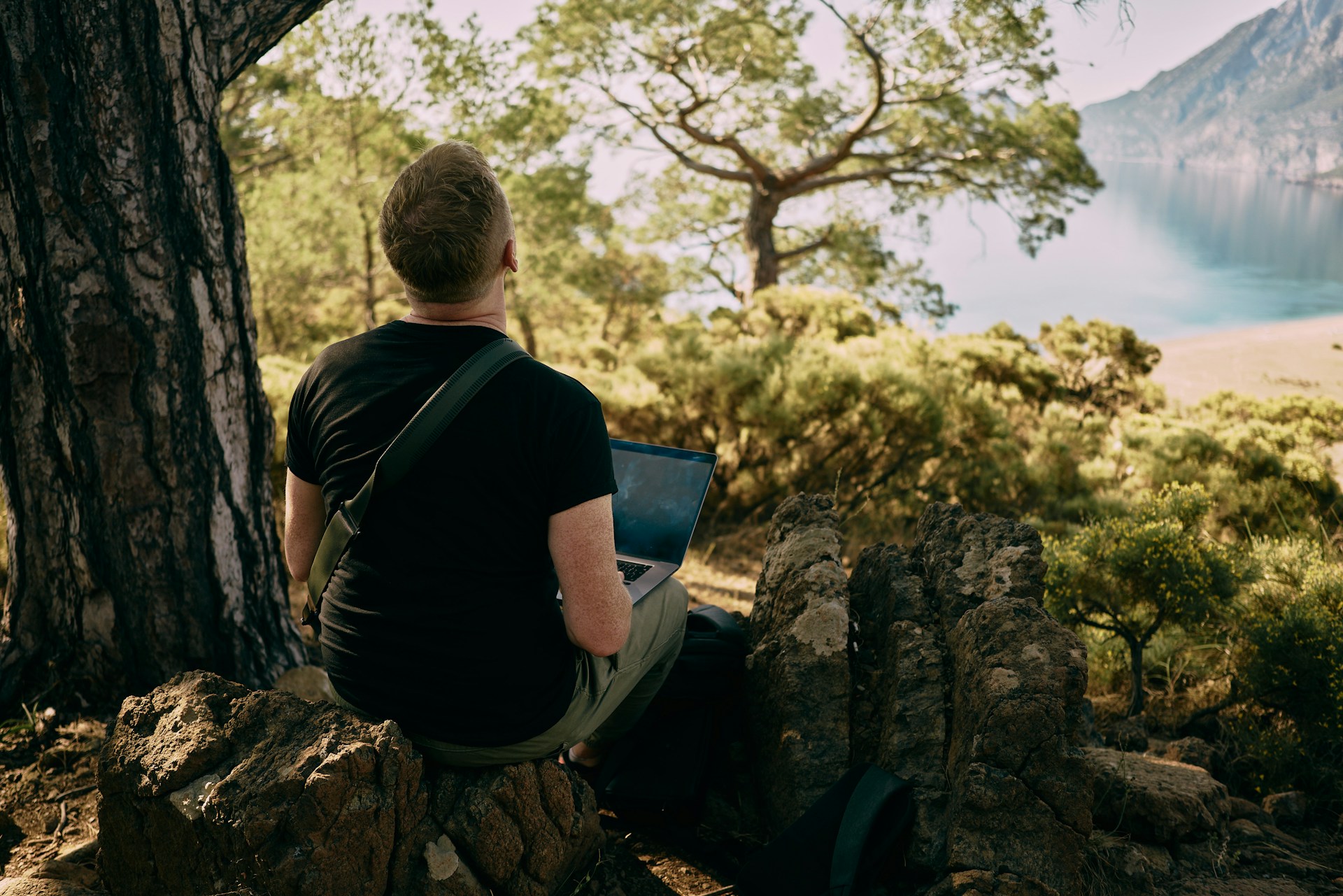
You Don’t Have to Stay Put: A Rough Start Guide to Going Remote for Real
There’s a moment — maybe while waiting for a microwave burrito to spin its last sad lap in your apartment kitchen — when it hits you. This isn’t what you signed up for. Life feels still. Your laptop’s open, emails are pinging, and your body is present, but some part of you is elsewhere. Maybe Portugal. Maybe Mexico City. Maybe just… not here. You’re not lazy. You’re not lost. You’re just craving movement that means something. And yeah, there’s a name for that.
The tools aren’t the problem
It’s not 2011 anymore. You don’t have to convince anyone that working remotely is “real.” Zoom works. Slack works. Asana works if you remember to check it. People build entire careers in Chrome tabs. And if your job isn’t remote, you’ve seen enough of them that are to know it’s not just a unicorn lifestyle. This isn’t about whether it’s possible. It’s about whether you’ll stop scrolling and decide to try. The infrastructure’s here — and remote work tools are mature. That’s not your excuse anymore.
Not everyone’s wired for motion
Look, this sounds obvious, but: just because it’s appealing doesn’t mean it fits. Some people need a favorite coffee mug and a door that shuts. Some people fall apart if they don’t have a gym they trust. Or a cat. Or a porch. So take time to assess whether nomad life fits you before you sell everything. Because no one posts the story about crying in a bus station or accidentally picking a city where you know zero humans and the weather makes you want to disappear. And it’s not a weakness to admit that consistency was doing more for your sanity than you thought.
Degrees are luggage you can carry
You might not be thinking about school right now. But honestly? Structure helps. There’s something about deadlines and discussion boards that gives you a rhythm when everything else is chaos. And yeah, a business degree can actually open doors, even if those doors are virtual. Especially if they’re virtual. Thebest online business programs don’t lock you into geography — they move with you. If you’re playing a long game, that stuff matters. Credentials, stability, language to talk about what you’re building.
You’ll need to make money (still)
This part never goes away. Dreaming’s cheap until you need to buy a sandwich. If your current gig can move with you — good. If not, you’ll have to learn something. Or do something you already know in a way that someone, somewhere, will pay you for. Freelancing. Remote ops. Customer support. Design. Writing. Consulting. It doesn’t have to be your dream job, it just has to not suck. And if you can build a remote‑friendly skill set before you leave, the transition won’t feel like free-fall.
Visas aren’t a suggestion
Countries have rules. Borders have boundaries. Just because your job is invisible doesn’t mean you are. Digital nomad visas exist, sure, but they’re not “come as you are.” They want income proof. Insurance. Sometimes translations of your bank statements. Every country’s different and it changes all the time. Learn how to meet legal requirements for remote work visas before you get on the plane. Otherwise, you’ll be learning the hard way — and that kind of learning is expensive.
Taxes don’t care that you’re on a beach
Money doesn’t stop needing labels just because you crossed a border. In fact, it gets messier. You’re still a citizen. You might still owe taxes. The country you’re in might want a cut, too. And if you’re not careful with contracts or how your income is structured, it can spiral. Some people wing it. Some regret that. Google is not a tax advisor. Talk to someone. Figure out jurisdiction and tax rules for nomads before you’re juggling currencies and late fees.
The work doesn’t disappear, it just follows you
You will still have emails. Deadlines. People who ghost you. There will be mornings where the café’s Wi-Fi is trash and your call drops five times. There will be nights when the timezone makes you feel like you live in a different universe from your team. You’ll miss dumb things like ergonomic chairs and a real grocery store. And you’ll start craving structure like food. But if you build in check-ins, routines, people, and habits that don’t break every time you move cities, you’ll find your rhythm. That’s what makes productivity and community while working abroad survivable. Not talent. Not drive. Rhythm.
This isn’t one of those “just go” pieces. Going is hard. But staying when your gut says leave — that eats you slowly. So if you’re reading this because something in you already left but your body hasn’t caught up, maybe this is your nudge. Not to leap recklessly. Just to ask a better question. “What if I tried?” is different than “What if I fail?” Either way, you’re allowed. You don’t need a blueprint. Just a first move.
Embark on your next adventure with The Wonder Map and discover unforgettable weekend getaways, vibrant city tours, and unique cultural experiences waiting just for you!
Related Getaways to You Don’t Have to Stay Put: A Rough Start Guide to Going Remote for Real
We use cookies to ensure that we give you the best experience on our website. If you continue to use this site we will assume that you are happy with it.